

Brick by brick
A town made from clay

Part 1: Brick by Brick
Sticky, claggy, muddy clay. It clings to the sole of your shoes with incredible resilience. It’s unavoidable, caking every inch of the well-trodden ground below. You jump back quickly as a worker maneuvers a small fork-lift through an impossibly small space, then set off again on your journey deeper through the long warehouse-style building passing bricks stacked high on shelves on both sides. At first you stare intently at each one, worrying you’ll miss something of interest, but after just a few more meters you begin to become complacent as you notice more bricks filling every nook and cranny, and you realise there aren’t enough moments in a lifetime to examine each and every one. More workers. Lifting, shifting, rotating, hoisting, pushing, pivoting. Bodies are everywhere, heads down, moving continuously, refusing to break the rhythm of their choreographed routine. By this point your shoes are so thick with clay you give up attempting to dodge the squelching puddles and focus instead on observing the incredibly labour-intensive performance in action, trying not to stand out; but you know it’s impossible not to, without a mask of clay-tinged skin.
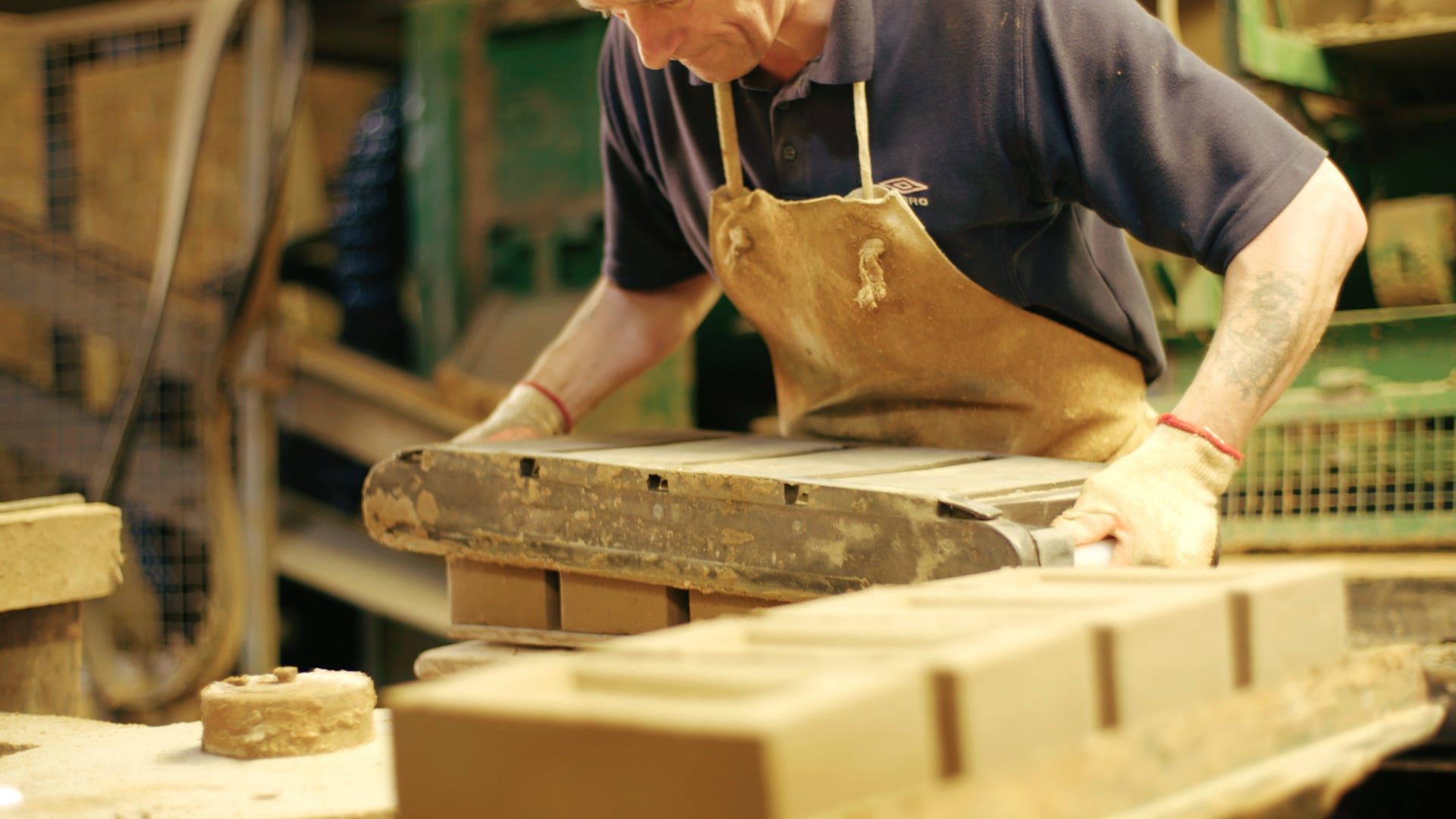
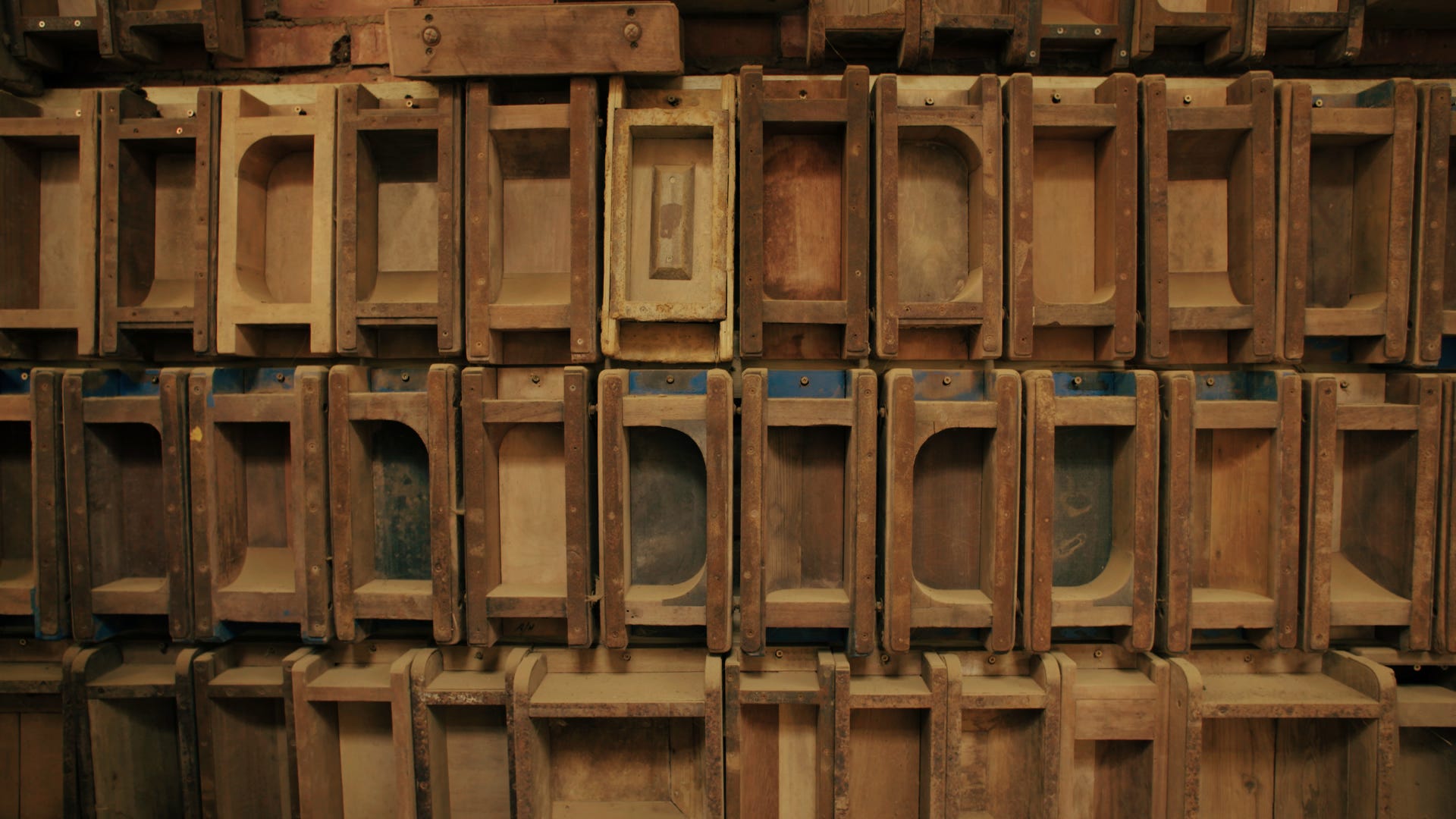
Two men stand with their backs facing the room, their arms moving in relentless unison like rotating pistons on a steam train. They slap large quantities of clay into the four-part brick moulds with a surprising and unexpected agility; bang the wooden moulds aggressively down onto the work bench; scrape off the excess material with a ‘harp’; flip the whole ensemble; then slowly, with an awkward shudder, reveal a row of four perfectly formed, sand-coated, rectangular blocks of clay. Any normal person would probably feel that they deserved a well-earned break at this point. But these are not any normal people. The artisanal brickmaker repeats this back-breaking act tirelessly, concocting brick after brick from the raw, shapeless material pulled from the earth only meters away, not slowing until his quota has been reached. 800 bricks for a standard wage, 4000 to earn his bonus.
Part 2: Chesham Multi’s
Next time you are lying in bed struggling to drift off to sleep, instead of counting sheep try to count the number of bricks needed to build a house. I feel quite confident in my advice that you won’t make it past one wall before dreams of something more exciting start to fill your sleepy mind. In the small town of Chesham alone I dare say there are more bricks sandwiched between layers of mortar than sheep roaming the fields of Wales. When you conjure up a picture of this town in your mind maybe you won’t immediately think of the 102.5cm x 65cm x 215cm blocks of clay that accumulate to construct every inch of this place, maybe you will think of the raucous landlady parading outside her pub or the red kites soaring in the skies above, but I am pretty certain somewhere in your image a red-y orange-ish backdrop will be there.
Buckinghamshire hands squeeze wet slack clay into sandy wooden moulds 1000’s of times per day in order to house the growing population of Chesham. The system works so smoothly that almost no city commuter has ever considered how their house came to be. But the brickmaker understands every detail. The brickmaker, of which many can be found in a disguise of jeans and a plain t-shirt in the Queen’s Head on a Saturday night, is aware of every wall, every street and every chimney.
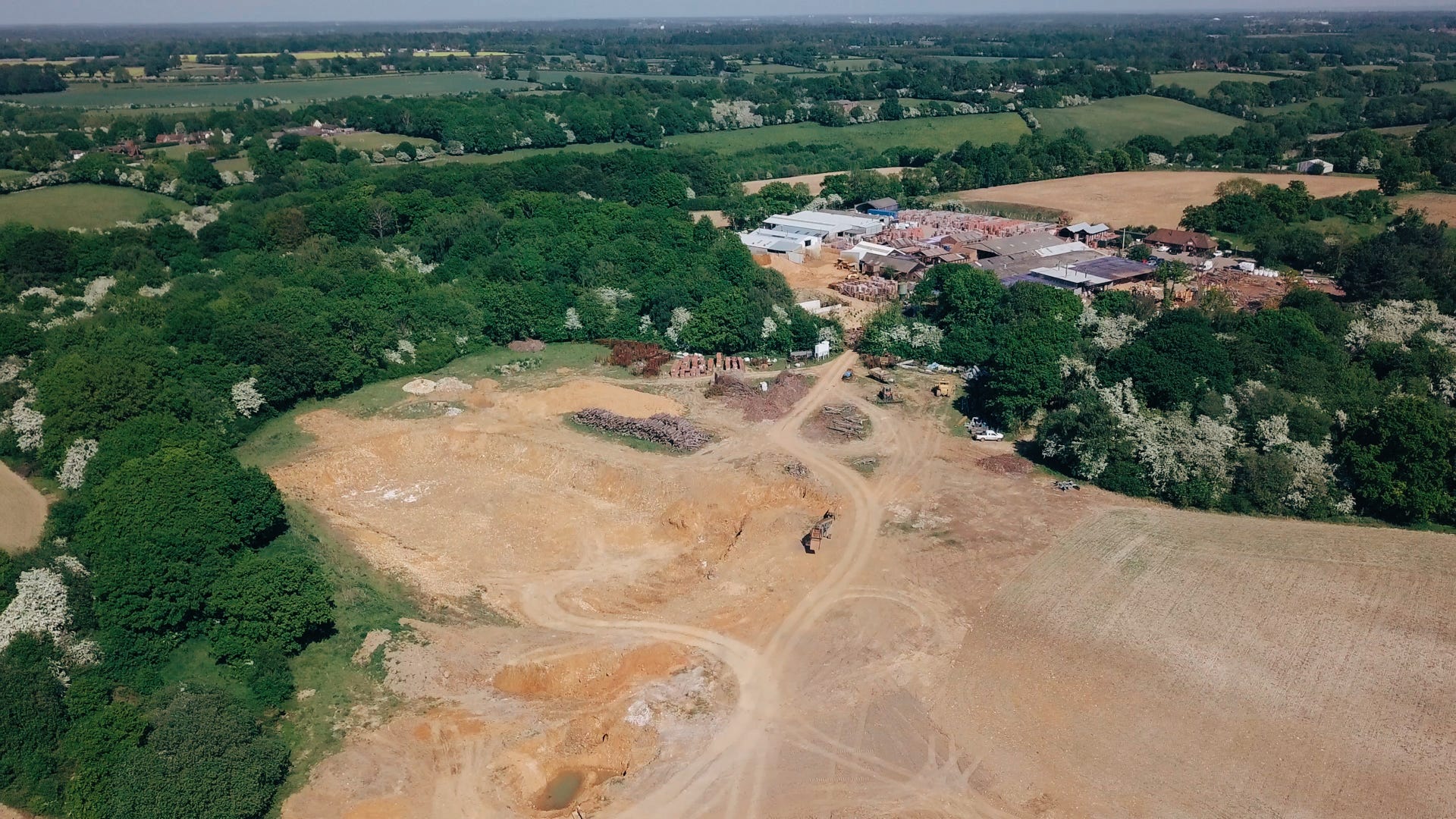
He doesn’t see a wash of red as do the rest of us less knowing inhabitants; he sees handmade Chesham Multi’s identifiable because of the mixtures of purplish reds and the small sand crease tracing its way across the bottom of each brick layered up in an Flemish bond; he sees the subtle browns of a Chalfont Mix and he knows that the clay comes from right beneath the feet of the people of the Chilterns and the sand made its way over thousands of years down the River Chess before being scooped into wooden brick moulds. He knows that the colour, consistency and thickness of the lime mortar laid down by his bricklayer cousins is the key to whether the brick will leap out of the wall or be over-shone by the mortar itself. He knows that the sooty grey ends of the bricks checkered between the reds are a result of the ancient wood-fired kiln technique revived at the brickworks after almost a century. And he knows, modestly and unassumingly, that without those humble bricks there would be no Chesham.
Part 3: A new chapter
You have to see it to believe it: Chesham has its own London Underground station. At 40km northwest of Charing Cross it is the furthest station from central London; claiming the title of both the northernmost and westernmost underground station. Not really being in London at all makes it all the more difficult to fathom how this infrastructure was ever realised.
Protected by English Heritage as a listed building this station is more of a historic monument than a commuter pit stop. Time seems to slow down as you near the Buckinghamshire stop: with trains only running every 30 minutes and regularly pausing for more than 10 minutes at the station, the usually impatient city-goer is forced to wind down their frantic metropolitan clock and succumb to life outside the Big Smoke. The ever-increasing distances between stops, commencing with a substantial 9-minute journey between Chalfont & Latimer and Chesham, helps to decelerate the commuter pendulum. Though a far cry from today’s electrically powered carriages you only have to allow your thoughts to stray into history to envision the steam trains that once convoyed briefcase-carrying bodies of Chesham back and forth from the city.
If you arrive at the station any time between 07:25 and 07:37 on a weekday morning you will see a man standing at the end of the platform, positioned just in front of the brick-built water tower, a peculiar nostalgic relic standing proudly at the end of the Metropolitan line. Despite the daily commuters milling around the station, I have no doubt you will be able to recognise the man I describe. Average height, trousers slightly too large, shoes that look suspiciously heavy duty for the office job he is clearly en route to. He performs this daily ritual, an act he knows so well, but even from the other end of the platform you can feel his heart isn’t really in it. 07:36. The train pulls in. He stands motionless. The others swiftly clamber aboard the London shuttle. But he hesitates. Glances over his shoulder gazing beyond the water tower in the direction of the factory he once worked, then, as if pulling his feet from thick clay, reluctantly boards the train.
This writing is taken from my thesis Building the Local, written in 2018. I won an award for the best thesis across all masters courses at the Design Academy Eindhoven. I felt proud of that!
I wanted to revisit it and share it with you. I was also thinking about different styles of writing. I wrote this as extracts to break up more academic formal writing about globalisation and deindustrialisation. There were originally 5 parts, but I’ve just shared my 3 favourites with you here.
I made a short documentary film too, which you can watch here: Building the Local