

What do you do?
Embracing my most feared question

For as long as I can remember I’ve felt confused about where my work and interests sit within the regular categories we use to describe what we do. The question alone, “What do you do?” fills me with dread. For a long time I’ve tried out the simple answer “designer”. But the follow up question always comes — “of what?”. And to be fair, it’s a very reasonable question, but it usually leaves me scrabbling around for what to say next.
To say you’re a designer must mean that you actually design something. A product, a logo, an outfit, an interior, possibly an experience. And although I have dabbled in some of those, these days I really don’t design very much at all.
Wracking my brain for something to say (as if it’s the first time I’ve been asked this), I quickly scan the person in front of me trying to figure out what answer will make most sense to them based on the little information I usually know about them – given that they’re asking me this question.
Sometimes I begin by listing my actual jobs, I say, “well a couple of days the week I work for a creative education organisation and the other half I do my own thing which involves research and writing, sometimes I run workshops and on the weekend I work at a sauna”. It’s not usually the concise response they’re looking for and it usually leaves people wondering where to take the conversation next.
Occasionally I tell them, “I studied something called Social Design”, which usually leaves them more confused than when we first began. When they inevitably ask me “what’s that?”, I explain that it’s an approach to design which looks at how design impacts and is impacted by culture, geology, politics, ecology and more.
And sometimes they say, “Ah, like UX (user-experience) design?”.
By this point I’m usually cringing inside and wanting the conversation to end and say, yeah kind of (absolutely not). “Anyway, what do you do?” Or I deflect by saying that my partner builds houses and for some reason that makes total sense and requires no further questioning and we go on talking about that.
But this year I’ve decided I’m going to embrace the question and do my best to tackle the answer head on. I’m testing out responses and seeing where they lead.
Here’s a list of answers I could try -
I’m a designer, writer, researcher and facilitator
I work in creative education
I’m a writer and researcher with a materials-led approach
I run a creative design practise
I work in the space between design and craft, architecture and agriculture
I investigate material origins; who makes things, how and where
I’m an educator
I do many things
I like some of them more than others, but to be honest I’m not totally convinced by any of them and I really can’t imagine myself saying some of them out loud. Occasionally I have tried and a few of them seem to do the trick of satisfying the person I’m talking to enough not to ask any further questions….
But is that really the aim?
Tree Approach to the rescue
I’ve recently been discovering some amazing Substack writers such as Anna Mack – helping to communicate what she calls a portfolio career – and a friend of mine Kasia Murfet – a champion for multi-passionate folk – and I’m learning to embrace and articulate this patchwork way of working.
In a brilliant post Anna introduced the ‘Tree Approach’.
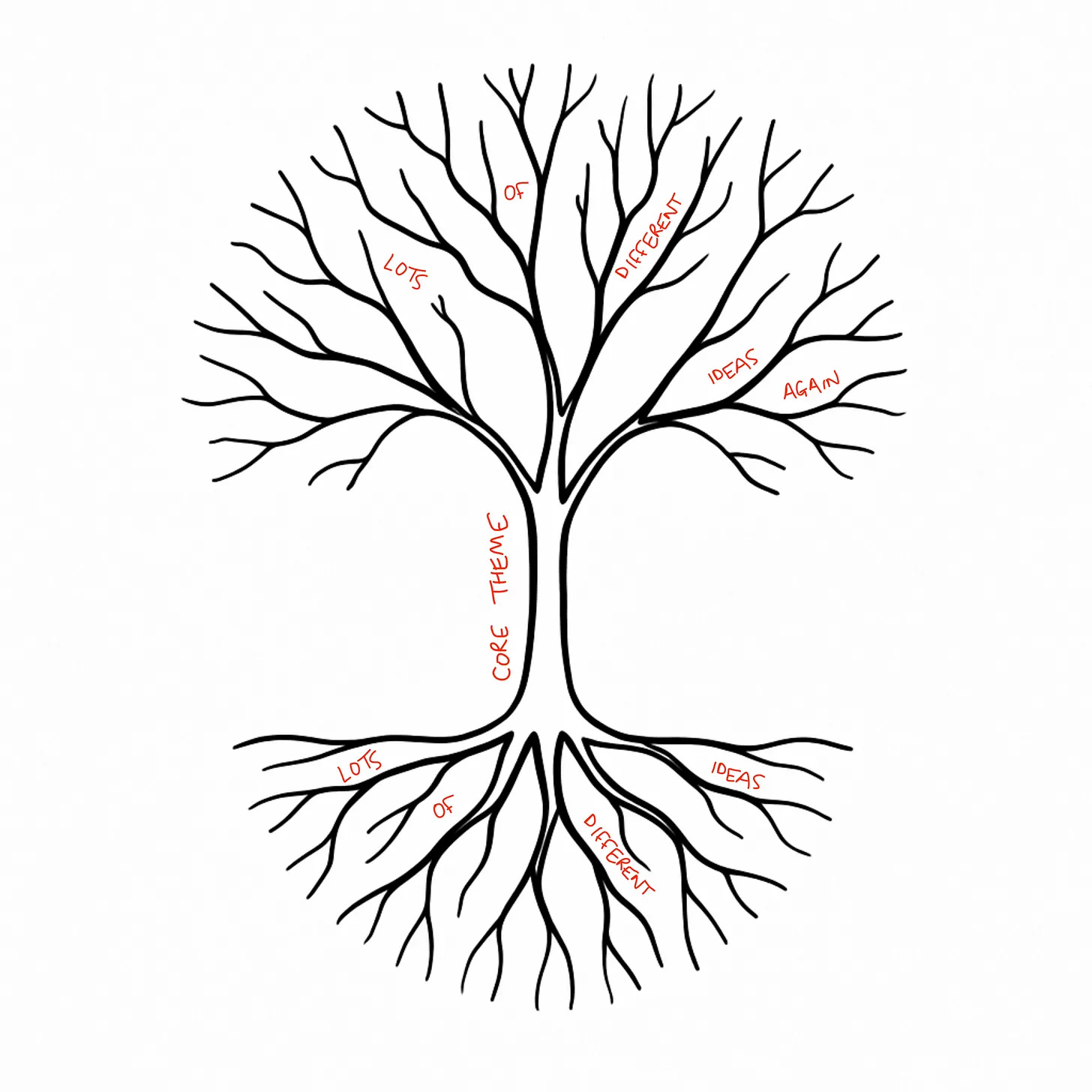
I decided for this newsletter I would try out this framework to describe my own work. Beginning at the bottom with the sprawling roots, this is the part that can feel most confusing and difficult to summarise. These are the all the things I’m interested in, all of the podcasts and the books and the articles and the films I read and save, the conversations that spark something inside me, spanning everything from psychology to craft, architecture to farming.
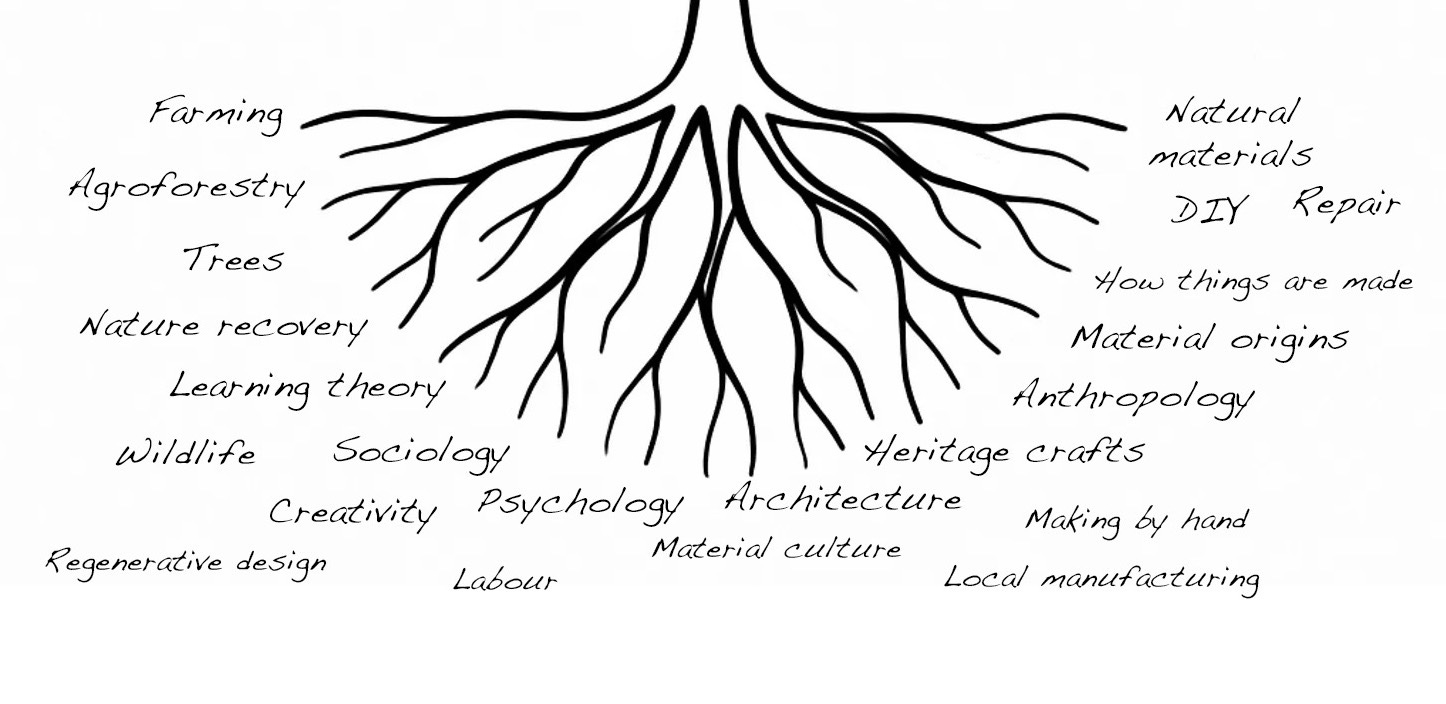
You can see how without moving up the tree this can feel pretty confusing and it’s no wonder even some people who know me well feel confused when I tell them about my day to day plans. One minute I’ll be taking a pig to the abattoir whilst the next I’ll be heading to an architecture seminar, running a brushmaking workshop followed by learning to retrofit a house.
How can all of these activities be related? Well this is where the trunk comes into play. The trunk is your core theme. I’ve also heard it be described as the umbrella to your practise. It’s the overarching theme or mission that pulls it all together. For me that could be Climate and Social Justice or Building regenerative futures. I’m still refining this, maybe the wording will change, but the principles always remain the same. For me the mission is to contribute to creating a world that is habitable, thriving and equitable for all species – human and more-than-human.
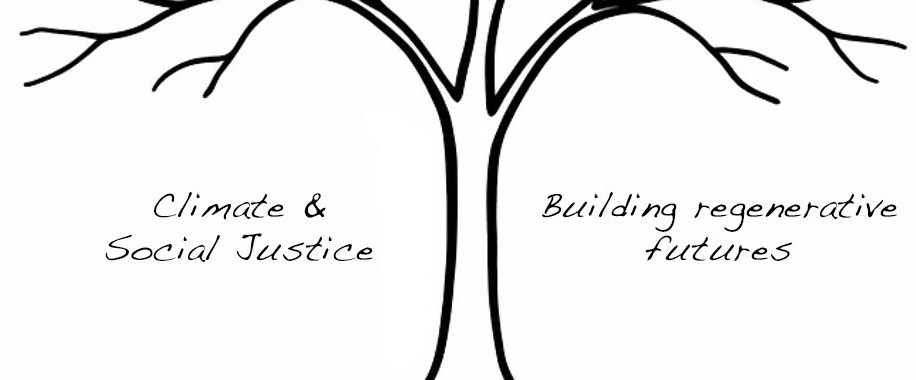
It’s a small amount of words but it’s not a small mission. It requires a multi-angled approach.
So that leads us on to the branches. Anna explains that the branches are where you should go broad again, with greater intent. For me I find it useful to pose these as questions.
Can creativity be taught?
In what ways can creativity help to tackle the climate emergency?
How can we create enough homes for people without blowing our already unachievable carbon budget?
Should we all be going plant-based or can it be beneficial to integrate livestock into farming systems?
Are craft skills a valuable and useful tool for climate resilience?
How can we persuade more people to use natural materials in their homes and the products they buy?
In what ways can we build relationships to objects and buildings to persuade people to care and repair?
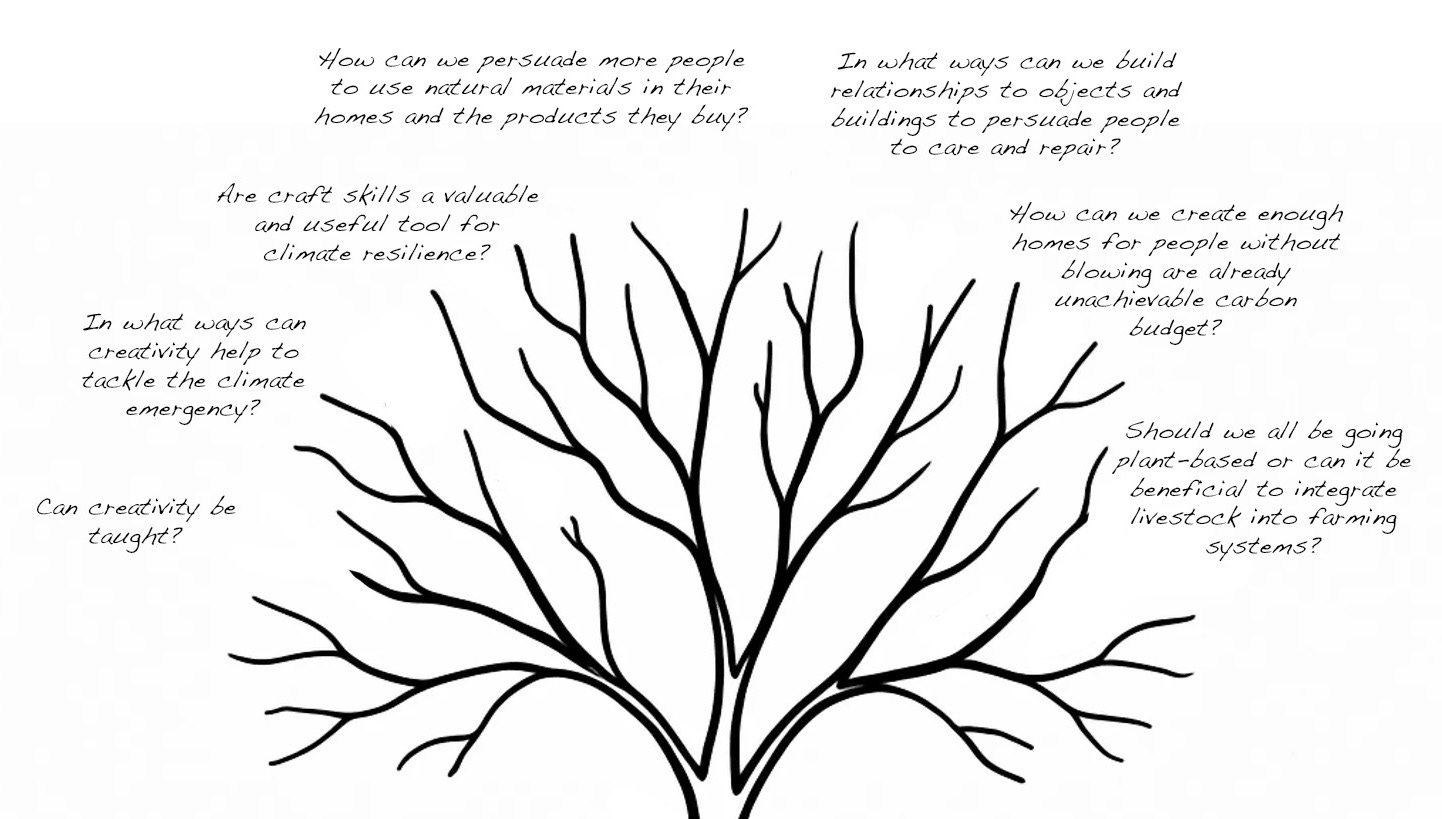
You can see how without the roots and the trunk these questions can seem broad and disconnected. But for me they are all related. And that’s what I’m trying to communicate to you.
Yes of course, I would love to say simply — I’m a carpenter, I’m a plasterer or a teacher. These are social frameworks we have created that people understand, they’re tangible jobs that we learn about in school and so much easier to name.
But I’m not any of those. I’m a person who questions every aspect of the world around us and the ways in which we choose to live our lives, and the impact that has on our future planet. I’m a person who looks to the food we eat, the clothes we wear, the houses we live in – because every part of our material world is made by someone from something. I’m a person that believes that even the smallest actions can add up to big shifts.
And that curiosity is the the key to change.
I’m working on how best to communicate this, but I think I’m getting a little closer everyday.
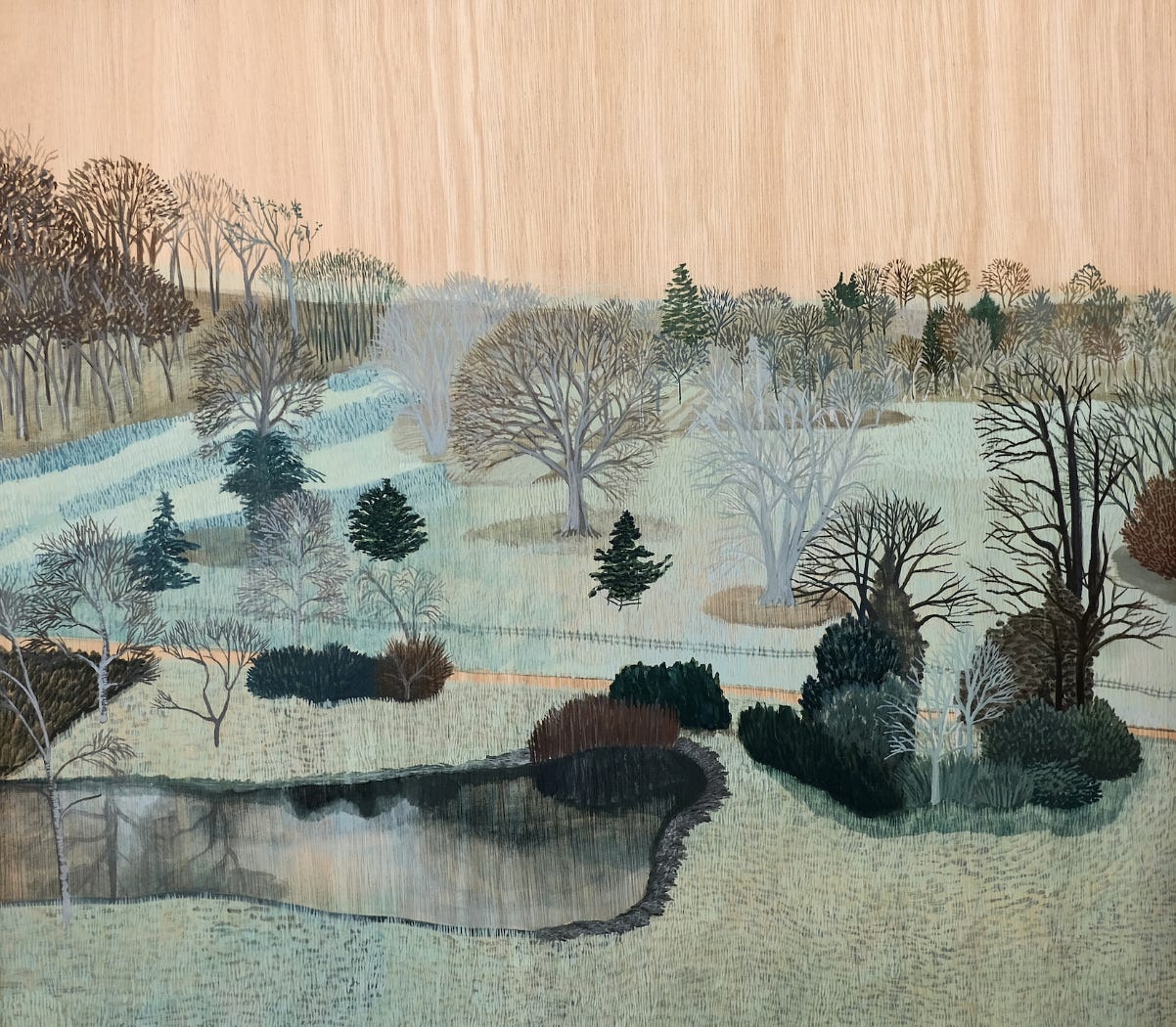
To leave you with the wise words of Mary Schmich (used in that infamous Baz Luhrmann sunscreen song) that always make me feel a little better –
“Don’t feel guilty if you don’t know what you want to do with your life,
The most interesting people I know
Didn’t know at 22 what they wanted to do with their lives
Some of the most interesting 40-year olds I know still don’t”
We have the same problem. This week I was talking to a new friend who is a primary school teacher. I told her I was a landscape researcher (a first outing of this title for me and literally made up on the spot). It felt natural and after asking how (on earth) I became one of them, she accepted it quicker than any role I’ve tried so far. “I do many things” is definitely going to get an outing if I’m feeling brave!
I really enjoyed this read <3